What should direct support professional documentation software do?
For people providing developmental disability support, useful documentation does more than confirm that a service happened. It records what the individual chose, how they participated, what level of assistance was offered, and which observations matter for continuity of care.
KinNotice is designed around a quick, structured approach to daily care notes, behavior context, activity participation, person-centered goals and care-team communication. Care staff should be able to document meaningful details without repeatedly copying the same information across separate files.
Daily progress notes that capture observable support
An effective DSP note describes an actual event, observable participation, relevant supports and an outcome. A standardized tag may identify an activity or assistance level; a short note adds what made that moment unique.
Fictional example: “At 1:20 PM, Taylor selected the garden activity, watered three plants independently and needed one verbal reminder to return the tools. Taylor then requested a drink and rejoined the group.”
Compare that with “Taylor had a good day.” The first account provides timing, choice, activity, independence, prompting and follow-up context—details a supervisor or another caregiver can use.
Behavior observations with important context
Behavior documentation is most useful when it describes what actually happened rather than assuming a motive or cause. Context might include the preceding activity, communication, sensory environment, support offered and observed response.
A DSP may record that a participant left a crowded space during a transition, accepted an available alternative and returned to the group afterward. That describes events, not a diagnosis. Focused behavior tracking and formal incident reporting should remain distinct from ordinary notes.
Review behavior tracking vs. daily notes and incident documentation for more examples.
Activities, goals and levels of assistance
For adult day, community participation, residential and I/DD programs, useful records distinguish attendance from meaningful participation. Staff can describe the person's preferences, actual tasks practiced, communication and support levels.
An activity note may support a person-centered goal conversation, but should not automatically be converted into a formal goal measurement. Goals with defined criteria need their own consistent measurement rules.
See activities and individual goals and goal documentation examples.
Shift handoffs without rebuilding a person's entire day
Staff may change throughout the day. A new DSP often needs to understand important changes, helpful supports, incomplete follow-up and upcoming events without reading every note from the start.
A care documentation system can make relevant recipient history easier to locate and summarize. It should preserve when an event occurred and who recorded it, so a later note is not confused with an observation made during the earlier shift.
Our DSP shift handoff checklist offers a practical model for what to pass to the next caregiver.
A clear distinction between staff, supervisor and family access
Frontline employees, supervisors, administrators and family members have different responsibilities. KinNotice's organizational approach emphasizes assigned recipient access, relevant program scope, attributable record history and appropriately curated family updates.
Family members may benefit from a meaningful summary of participation without needing unrestricted access to sensitive internal notes. Supervisors may review documentation relevant to their programs without automatically receiving every organization's records.
Explore staff and supervisor workspaces, Family Connection, and record history.
How DSP documentation software fits existing care systems
Caregiver logging and care coordination are not the same as a clinical electronic health record, electronic medication administration record, payer billing system or regulated incident-reporting platform. Organizations should maintain the specialized systems and procedures required for their services.
The strongest workflow is one that makes ordinary observations less burdensome without hiding the difference between scheduled care, completed services, narrative notes, formal goals and safety events.
For a vendor evaluation checklist, see how to evaluate HCBS and I/DD documentation software.
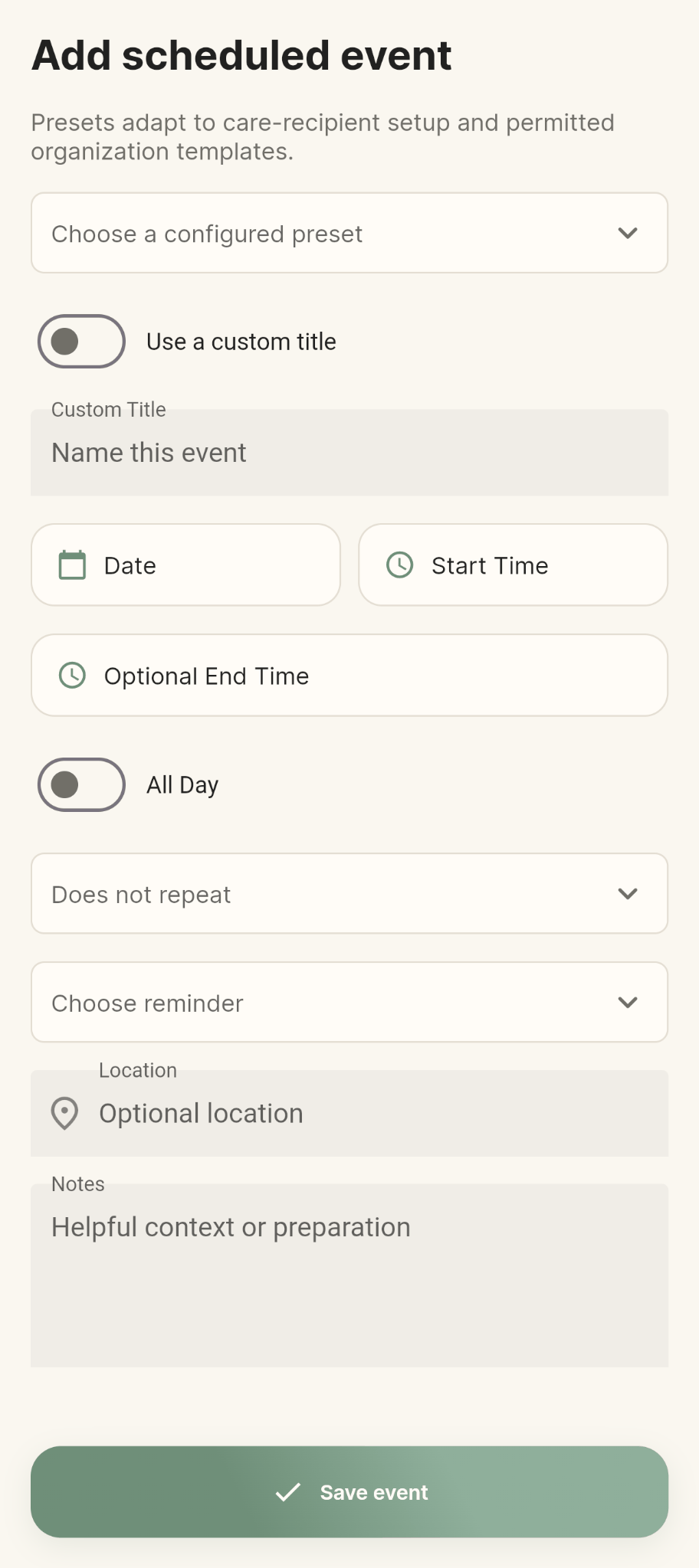
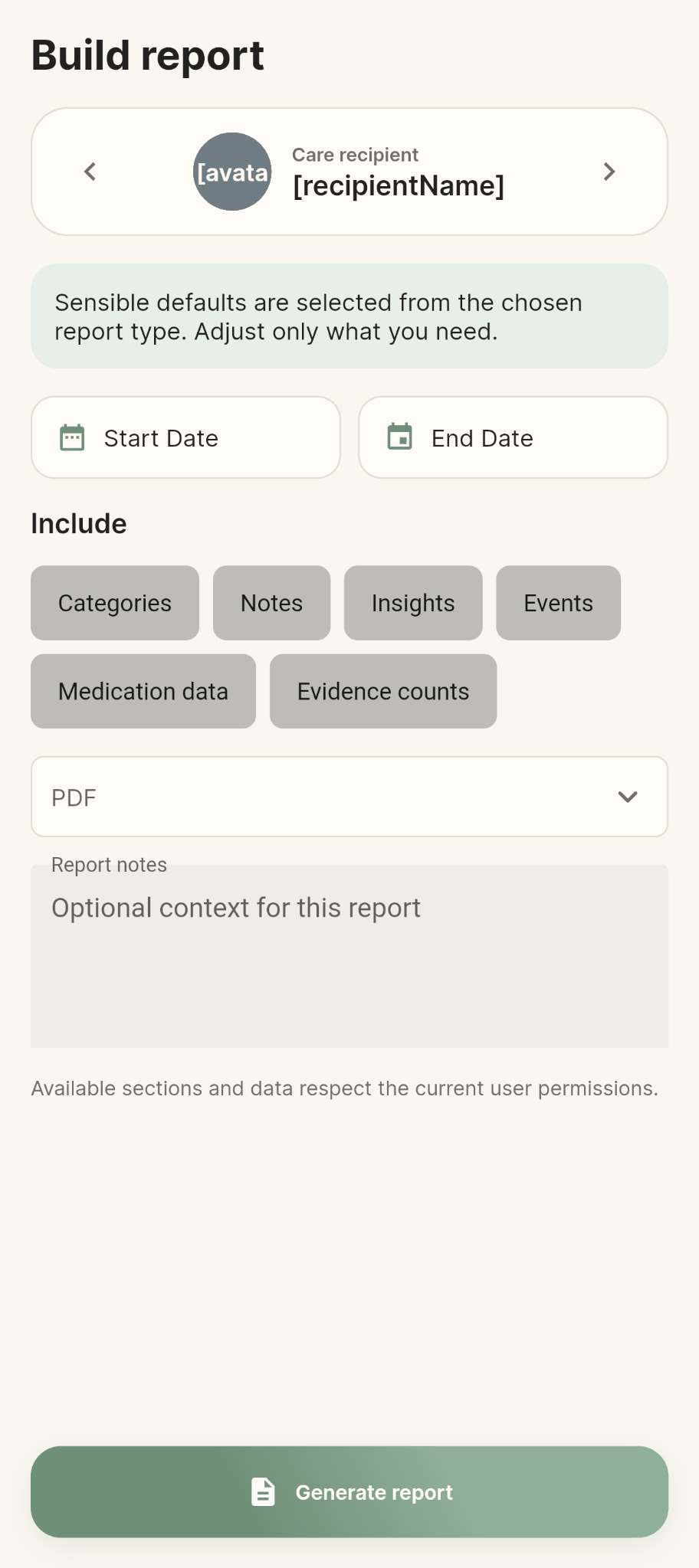
KinNotice interface preview
These visuals illustrate the product's approach to organizing care events and creating readable summaries. They are examples of the intended user experience, not evidence that every workflow shown is available in every setting.
Frequently asked questions
What is DSP documentation software?
Software that helps direct support professionals record appropriate daily observations, activity participation, assistance levels and other care context, subject to the organization's policies and requirements.
Does KinNotice replace an EHR or eMAR?
No. KinNotice focuses on caregiver documentation and coordination rather than replacing specialized clinical, medication administration, mandatory reporting or payer billing tools.
Can adult day programs use the same documentation approach?
Yes. Adult day and day habilitation teams can benefit from consistent staff notes, activity context, individual goals and structured family communication.
How do you improve inconsistent DSP daily notes?
Use shared categories, objective examples and clear context about the activity, support offered and observable outcome. Review the notes against the person's plan and agency requirements.